September 24, 2026
You do not need a massive IT budget to protect your small business from devastating cyberattacks. The National Institute of Standards and Technology (NIST) provides a free, flexible Cybersecurity Framework that serves as a gold-standard defense blueprint for companies of any size.
While it may sound highly technical, the framework is designed to scale to smaller teams and can help you organize security priorities without adding unnecessary complexity.
To help you get started, this guide explains what NIST is, how the Cybersecurity Framework works, and how your small business can use it to manage cybersecurity risk. You will also learn how its core functions can help you strengthen defenses, protect sensitive data, and reduce the potential impact of a cyberattack.
TABLE OF CONTENTS
- What Is NIST?
- What Is the NIST Cybersecurity Framework?
- Does the NIST Cybersecurity Framework Apply to Small Businesses?
- Is NIST Compliance Mandatory?
- Can a Business Become NIST Certified?
- NIST CSF 2.0 vs. Other NIST Standards
- What Changed With NIST CSF 2.0?
- The Six Functions of NIST CSF 2.0
- How Small Businesses Can Use NIST Profiles
- What Are NIST CSF Tiers?
- How to Implement NIST CSF 2.0 in a Small Business
- Common NIST Implementation Mistakes Small Businesses Make
- When Should a Small Business Get Professional NIST Help?
- Build a NIST Aligned Cybersecurity Program With NzingaNet
- Frequently Asked Questions
Key Takeaways
- NIST stands for the National Institute of Standards and Technology, a non-regulatory federal agency within the U.S. Department of Commerce.
- The NIST Cybersecurity Framework, or CSF, helps organizations understand, prioritize, manage, and communicate cybersecurity risk.
- CSF 2.0 is designed for organizations of any size, industry, or cybersecurity maturity, including small businesses.
- The framework is organized around six Functions: Govern, Identify, Protect, Detect, Respond, and Recover.
- Using the NIST CSF is voluntary for most private organizations, although contracts, customers, supply chains, or government requirements may require specific NIST-based practices.
- NIST does not certify companies as "NIST compliant" under the Cybersecurity Framework.
- Small businesses can use Current and Target Profiles to turn cybersecurity gaps into a prioritized improvement roadmap.
- NIST vulnerability management involves more than running a scanner. Businesses also need to evaluate, prioritize, remediate, verify, and continuously manage weaknesses.
What Is NIST?
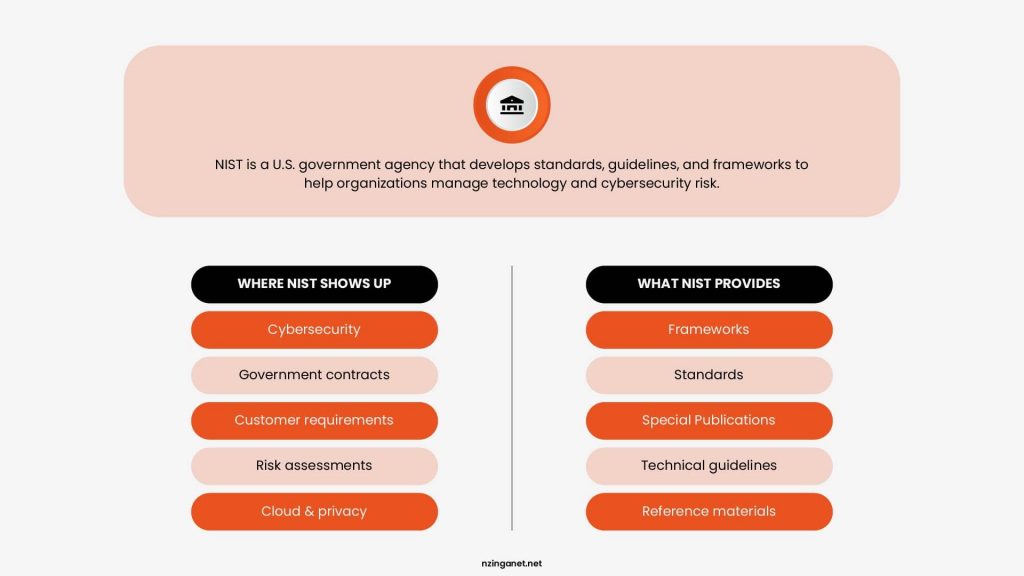
The National Institute of Standards and Technology (NIST) is a U.S. government agency within the Department of Commerce that develops standards, guidelines, and frameworks to help organizations manage technology and cybersecurity risks. For a small business, NIST may appear in conversations about:
- Cybersecurity
- Government contracts
- Customer security requirements
- Controlled Unclassified Information
- Risk assessments
- Password and authentication practices
- Incident response
- Vulnerability management
- Privacy
- Cloud security
- Supply chain risk
This is why saying your company "uses NIST" is not very specific.
NIST publishes many frameworks, standards, Special Publications, technical guidelines, and reference materials. The first step is identifying which NIST resource actually applies to the business requirement you are trying to address.
What Is the NIST Cybersecurity Framework?
The NIST Cybersecurity Framework (CSF) is a flexible set of cybersecurity guidelines that helps organizations identify and manage their cybersecurity risks. Rather than telling businesses which security products to buy, it provides a structured way to organize security activities around their most important systems, data, and risks.
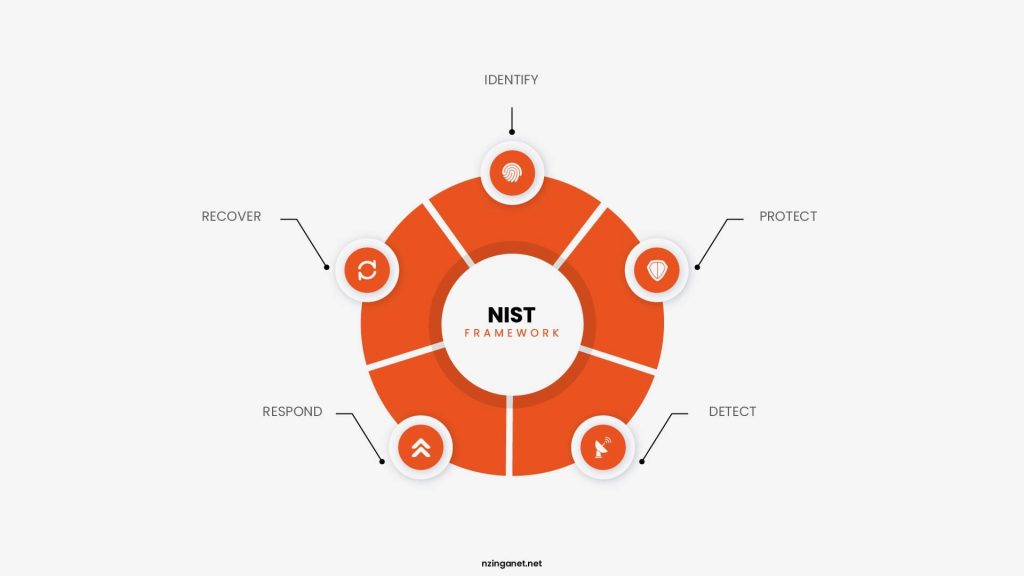
The framework is built around five core functions:
- Identify: Understand your systems, data, assets, and cybersecurity risks.
- Protect: Put safeguards in place to reduce those risks.
- Detect: Monitor for suspicious activity and identify potential cybersecurity events.
- Respond: Take action when a cybersecurity incident occurs.
- Recover: Restore affected systems and improve your security approach after an incident.
These functions work together as an ongoing process rather than a one time checklist. For a small business, that means you can start by identifying your most important assets and risks, address the biggest gaps first, and gradually strengthen the rest of your security practices.
Does the NIST Cybersecurity Framework Apply to Small Businesses?
Yes. The NIST Cybersecurity Framework 2.0 is designed to be flexible enough for organizations of different sizes, industries, and levels of cybersecurity maturity, including small businesses. You do not need a large security team or complex infrastructure to use its core principles.
For an SMB, the framework can provide a practical structure for deciding what to protect, which risks need attention first, and how to respond when something goes wrong. It can also help organize security practices that may already exist but lack a consistent process.
You can scale the framework around your own environment. A small business might start by identifying its critical systems and sensitive data, reviewing current safeguards, and addressing the most significant gaps before expanding its efforts.
Is NIST Compliance Mandatory?
NIST compliance is not generally mandatory for every business in the United States. However, NIST requirements can become relevant when a business works with government agencies, federal contracts, or specific regulated environments that require compliance with particular NIST standards or controls. Contract terms and applicable regulations determine when those requirements apply.
For most small businesses, the NIST Cybersecurity Framework is better viewed as a practical cybersecurity framework rather than a mandatory compliance checklist. It can help you assess risks, identify security gaps, and establish priorities even when no contract or regulation requires its use.
Before claiming NIST compliance, review the specific contract, regulation, or security standard that applies to your organization. Different NIST publications address different cybersecurity and information security requirements, so simply following the Cybersecurity Framework does not automatically mean a business meets every NIST standard.
Can a Business Become NIST Certified?
Not in the same way a business can become certified under standards that offer formal certification programs. NIST does not provide a general certification for businesses that implement the NIST Cybersecurity Framework (CSF).
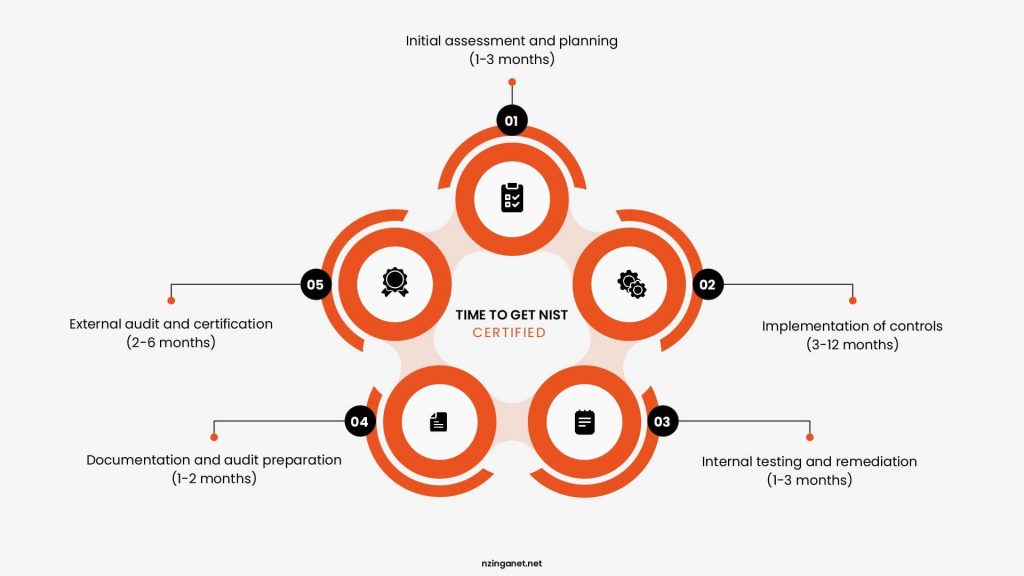
Instead, organizations can use the framework to assess their current cybersecurity practices, identify gaps, and work toward a stronger security posture. A business can also document how its controls and processes align with relevant NIST guidance.
This distinction matters because using the NIST Cybersecurity Framework does not automatically make a business "NIST certified" or compliant with every NIST standard. If a contract or regulatory requirement calls for specific NIST controls or publications, the organization must meet those particular requirements.
For small businesses, the practical goal is to use NIST guidance to strengthen security and demonstrate that cybersecurity risks are being actively managed, rather than pursuing a general NIST certification that does not exist.
NIST CSF 2.0 vs. Other NIST Standards
NIST publishes a range of cybersecurity standards and guidelines, and they do not all serve the same purpose. NIST CSF 2.0 provides a broad framework for managing cybersecurity risk, while other NIST publications offer more detailed guidance for specific security areas.
The NIST Cybersecurity Framework 2.0 is designed to help organizations understand and manage cybersecurity risk at a high level. Its six core functions are Govern, Identify, Protect, Detect, Respond, and Recover. This makes CSF 2.0 useful for creating an overall cybersecurity strategy and deciding where your organization needs to improve.
Other NIST publications can provide more specific technical or security guidance. For example, NIST SP 800-53 provides a catalog of security and privacy controls, while NIST SP 800-171 focuses on protecting Controlled Unclassified Information in nonfederal systems and organizations.
| NIST Resource | Primary Purpose | Best Use |
|---|---|---|
| NIST CSF 2.0 | Organizes cybersecurity risk management | Building an overall cybersecurity program |
| NIST SP 800-53 | Provides detailed security and privacy controls | Selecting and implementing specific controls |
| NIST SP 800-171 | Protects Controlled Unclassified Information | Organizations handling CUI under applicable requirements |
| NIST SP 800-61 | Provides incident response guidance | Preparing for and managing cybersecurity incidents |
What Changed With NIST CSF 2.0?
NIST CSF 2.0, released in February 2024, expanded the original framework to give organizations a broader and more flexible approach to cybersecurity risk management. The biggest change was the addition of Govern as a sixth core function alongside Identify, Protect, Detect, Respond, and Recover.
The update also made the framework more useful beyond critical infrastructure. CSF 2.0 is intended for organizations of all sizes and across different industries, making it more relevant to small businesses that want a structured approach to cybersecurity.
Here are the key changes:
| Change | What It Means for SMBs |
|---|---|
| Govern was added | Businesses can address cybersecurity strategy, policies, roles, responsibilities, and risk management alongside technical security measures. |
| Broader scope | The framework is designed for organizations across industries, not just critical infrastructure. |
| Greater focus on governance | Cybersecurity becomes a business and leadership responsibility, rather than only an IT concern. |
| Updated Core and Categories | The framework provides revised outcomes and terminology to help organizations organize their cybersecurity efforts. |
| More implementation guidance | NIST expanded supporting resources to help organizations determine how to use CSF 2.0 based on their needs and circumstances. |
The Six Functions of NIST CSF 2.0
NIST CSF 2.0 organizes cybersecurity activities into six functions: Govern, Identify, Protect, Detect, Respond, and Recover. Together, they provide a practical structure for managing cybersecurity risk from planning and prevention through incident response and recovery.
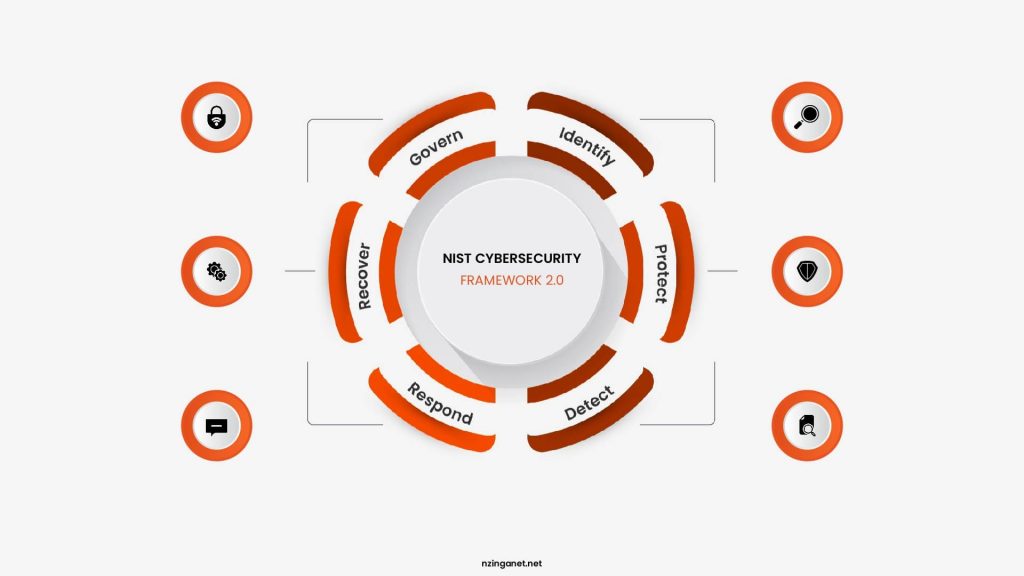
1. Govern
Govern establishes how your business manages cybersecurity risk. It covers policies, roles and responsibilities, risk tolerance, legal and regulatory requirements, and supply chain considerations. For an SMB, this means deciding who is responsible for security, which risks the business can accept, and what security priorities support its business goals.
2. Identify
Identify focuses on understanding your organization's cybersecurity risks. This includes knowing what systems, data, devices, applications, and services you rely on and assessing the risks associated with them. A small business can start by identifying its most important assets and sensitive information, then determining which threats or weaknesses could affect them.
3. Protect
Protect covers the safeguards you put in place to reduce cybersecurity risk. These can include access controls, authentication, security awareness training, data protection, and technology safeguards. The goal is to reduce the likelihood and potential impact of a security incident.
4. Detect
Detect focuses on finding possible cybersecurity threats and incidents as quickly as possible. Monitoring systems, reviewing security alerts, and identifying unusual activity can help your team recognize problems before they cause greater damage. For SMBs, detection does not necessarily require a large security operation. The right monitoring and alerting practices can provide visibility into important systems and activity.
5. Respond
Respond covers what your business does after identifying a cybersecurity incident. It includes incident response planning, communication, analysis, containment, and mitigation. Having defined response procedures helps your team act quickly instead of deciding what to do during an active incident.
6. Recover
Recover focuses on restoring systems, services, and operations after a cybersecurity incident. It also includes reviewing what happened and using those lessons to improve future resilience. Reliable backups, recovery procedures, communication plans, and post incident reviews can help an SMB return to normal operations with less disruption.
How Small Businesses Can Use NIST Profiles
NIST Profiles help a business translate the Cybersecurity Framework into priorities that fit its own environment. Instead of trying to address every cybersecurity outcome at once, an SMB can use a Profile to define which outcomes matter most based on its systems, risks, business goals, and available resources.
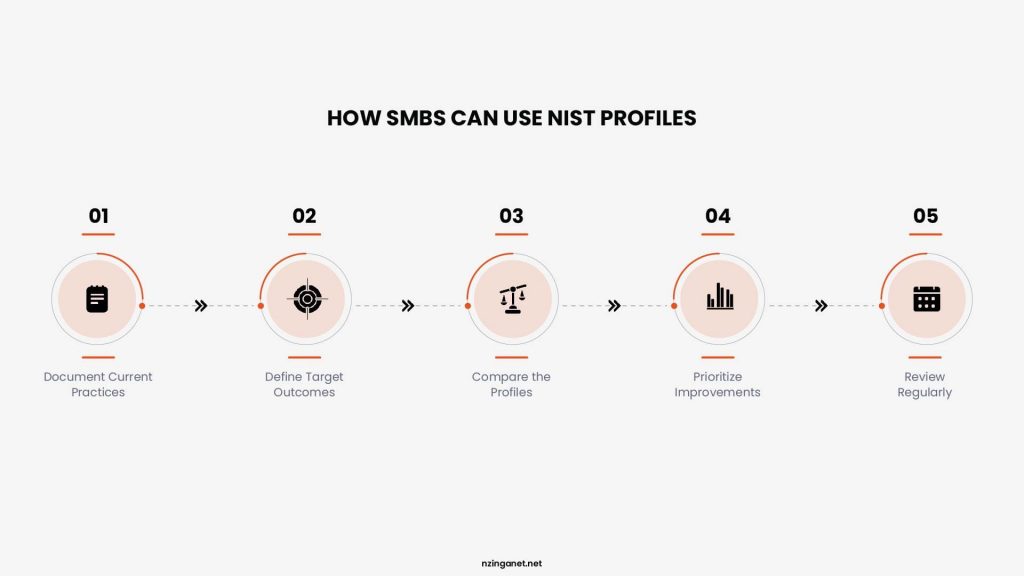
A small business can create a Current Profile to document where its cybersecurity practices stand today. It can then create a Target Profile that describes the cybersecurity outcomes it wants to achieve. Comparing the two helps identify gaps and determine which improvements should come first.
For example, an SMB might find that its current practices provide limited protection for sensitive customer data or lack a defined incident response process. Those gaps can become priorities in its Target Profile.
A practical process looks like this:
- Document your current practices and cybersecurity outcomes.
- Define your target state based on business risks and priorities.
- Compare the Current and Target Profiles to identify gaps.
- Prioritize improvements based on risk, resources, and business impact.
- Review the Profile periodically as your technology, risks, and business needs change.
What Are NIST CSF Tiers?
NIST CSF 2.0 uses four Tiers to describe how an organization approaches cybersecurity risk management. They range from informal, reactive practices to a more structured and risk informed approach.
The Tiers are not maturity levels or a certification system. They help an organization understand the characteristics of its current cybersecurity practices and determine how well those practices align with its business needs and risk management approach.
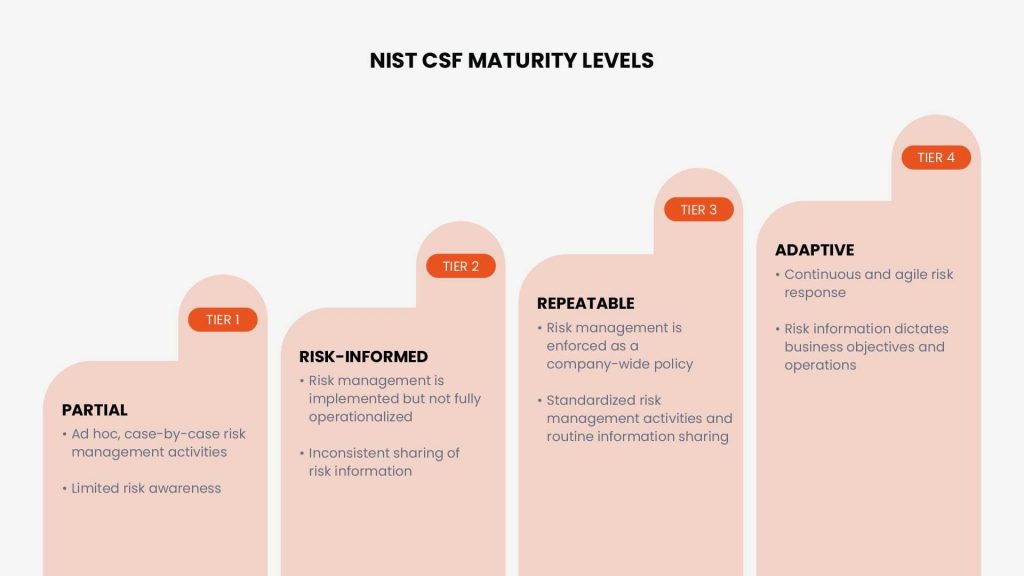
For a small business, the goal is not necessarily to reach Tier 4. The appropriate Tier depends on factors such as your risk exposure, business objectives, available resources, and security requirements.
For example, an SMB with limited resources may initially operate at Tier 1 or Tier 2 while working toward more consistent security practices. The Tier structure can help leadership understand how cybersecurity is currently managed and where greater consistency or integration may be needed.
How to Implement NIST CSF 2.0 in a Small Business
Implementing NIST CSF 2.0 does not mean rebuilding your entire cybersecurity program at once. A small business can start with the systems, data, and risks that matter most, then use the framework to organize and prioritize improvements.
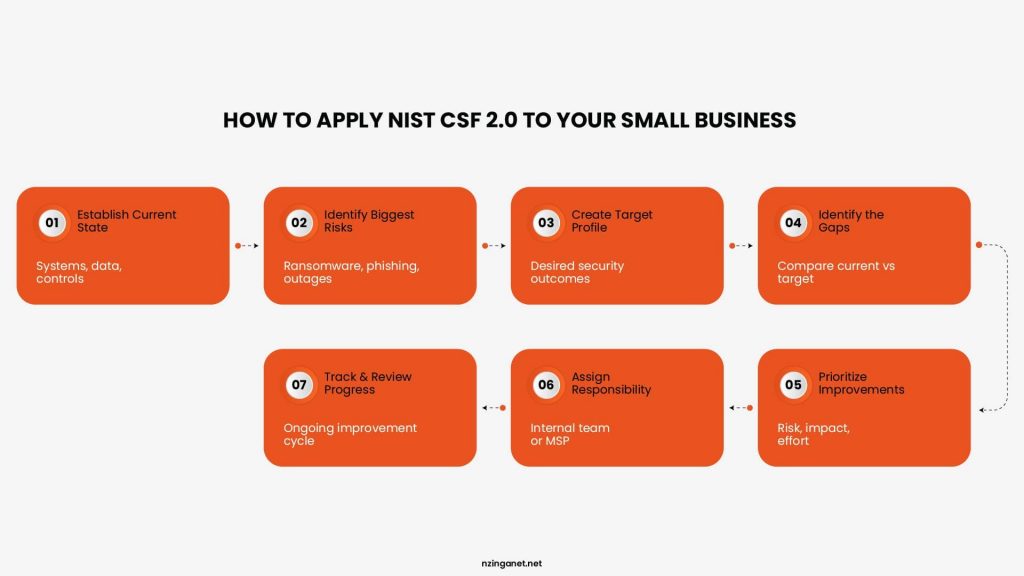
1. Establish Your Current State
Start by documenting your existing cybersecurity practices. Identify the systems, devices, applications, data, and services your business relies on. Review the safeguards already in place and note areas where security practices are inconsistent or missing.
2. Identify Your Biggest Risks
Focus on risks that could have the greatest impact on your business. Consider threats such as unauthorized access, ransomware, data loss, phishing, system outages, and third party exposure. Prioritize these risks based on their potential business impact rather than trying to address everything at once.
3. Create a Target Profile
Define the cybersecurity outcomes your business wants to achieve. Your Target Profile should reflect your most important assets, risk tolerance, business requirements, and available resources. This gives your team a clear picture of where you want your cybersecurity practices to be.
4. Identify the Gaps
Compare your current practices with your Target Profile. Look for areas where your existing controls, policies, processes, or capabilities do not meet your desired outcomes. These gaps become the basis for your improvement plan.
5. Prioritize Improvements
Not every gap requires immediate action. Rank improvements based on risk, business impact, available resources, and implementation effort. For example, strengthening authentication or improving backups may take priority over lower impact security improvements.
6. Assign Responsibility
Define who owns each cybersecurity responsibility. Depending on the business, this could involve internal IT staff, leadership, managed service providers, or other third parties. Clear ownership helps prevent important security tasks from being overlooked.
7. Track and Review Progress
NIST CSF 2.0 should become an ongoing part of your risk management process rather than a one time exercise. Review your progress, reassess risks, and update your cybersecurity priorities as your business, technology, and threat environment change.
Common NIST Implementation Mistakes Small Businesses Make
Using the NIST Cybersecurity Framework can give an SMB a clearer way to manage security, but the value depends on how it is implemented. Common mistakes can turn a flexible framework into a complicated exercise that adds work without improving security.
1. Treating NIST as a Compliance Checklist
NIST CSF 2.0 is designed to help organizations manage cybersecurity risk, not simply check off a fixed list of requirements. Trying to complete every possible security activity at once can create unnecessary work and distract from higher priority risks. Start with the risks that matter most to your business and build from there.
2. Trying to Implement Everything at Once
Small businesses often have limited people, time, and budget. Attempting to address every cybersecurity gap simultaneously can overwhelm the team and make it difficult to complete important improvements. Prioritize actions based on risk, business impact, and available resources.
3. Focusing Only on Technology
Buying security tools does not automatically create a stronger cybersecurity program. NIST CSF 2.0 also considers governance, policies, responsibilities, processes, and risk management. Make sure your implementation addresses people, processes, and technology, not just software and hardware.
4. Skipping the Current State Assessment
You cannot identify meaningful improvements without understanding what you already have. Some SMBs jump straight into buying tools or changing controls without documenting their existing systems, data, security practices, and risks. Establish your current state before deciding what needs to change.
5. Ignoring the Govern Function
CSF 2.0 added Govern as one of its six core functions. Businesses that focus exclusively on technical safeguards can overlook important questions about security responsibilities, policies, risk tolerance, legal requirements, and third party relationships.
6. Failing to Assign Responsibility
Security tasks can easily fall through the cracks when nobody clearly owns them. Assign responsibility for important cybersecurity activities, even when an external IT or security provider handles some of the work. Everyone involved should know who is responsible for what and when those responsibilities need to be reviewed.
7. Treating Implementation as a One Time Project
Cybersecurity risks change as businesses add applications, employees, devices, vendors, and services. Completing an initial assessment does not mean the work is finished. Review your cybersecurity practices regularly and update your priorities as your business and risk environment change.
8. Measuring Activity Instead of Risk Reduction
Counting security tools, policies, or completed tasks does not necessarily show whether your cybersecurity has improved. Focus on outcomes that demonstrate meaningful progress, such as stronger access controls, better backup practices, faster incident detection, or improved recovery capabilities.
When Should a Small Business Get Professional NIST Help?
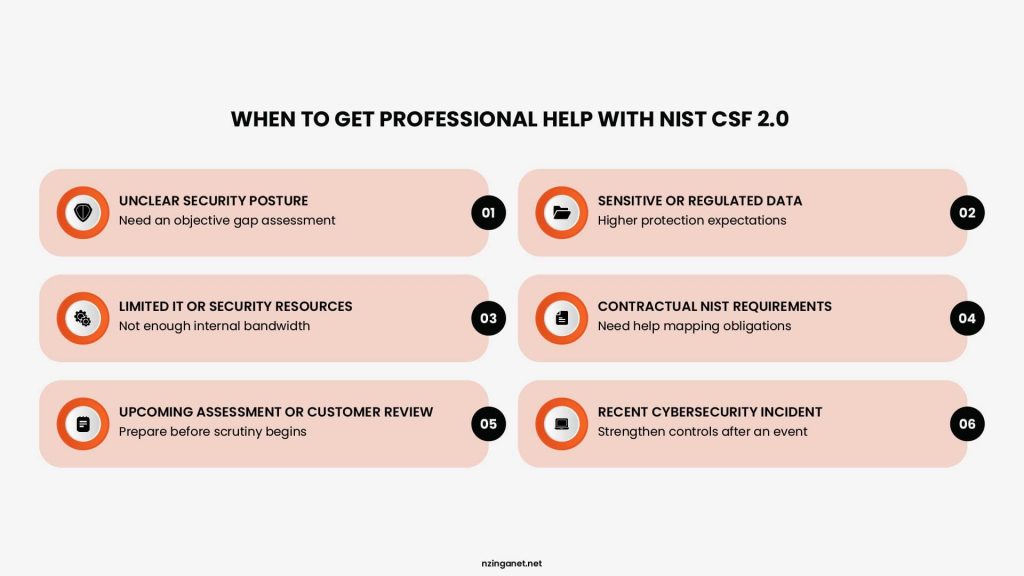
Not every small business needs outside help to use the NIST Cybersecurity Framework. If your team has a clear understanding of its systems, risks, and existing security practices, you may be able to work through the framework internally.
Professional support becomes more valuable when your security environment is complex, your team lacks cybersecurity expertise, or you are unsure how to prioritize identified gaps.
Consider getting professional guidance when:
- You cannot clearly assess your current security posture. An outside assessment can help identify gaps your internal team may overlook.
- You handle sensitive or regulated data. Additional expertise can help you understand the security practices needed for your specific environment.
- You have limited internal IT or security resources. A specialist can help translate the framework into practical priorities without placing the entire workload on your existing team.
- You need to align with contractual requirements. Professional guidance can help determine which NIST publications, controls, or requirements actually apply to your business.
- You are preparing for a security assessment or customer review. An external review can help identify weaknesses before they become a problem.
- You have experienced a cybersecurity incident. Professional support can help assess what failed, strengthen controls, and improve incident response and recovery processes.
The goal is not to bring in outside help simply because you are using NIST. Professional guidance makes sense when you need expertise to interpret your risks, prioritize improvements, or build a cybersecurity program your internal team can maintain.
Build a NIST Aligned Cybersecurity Program With NzingaNet
A framework only becomes useful when it translates into decisions your team can act on. NzingaNet helps small businesses turn NIST guidance into a practical cybersecurity roadmap built around their actual environment, risks, and priorities.
Our team can assess your existing security practices, identify gaps across the NIST CSF 2.0 functions, and help prioritize the improvements that deserve attention first. We can also help establish clearer security processes, strengthen technical safeguards, and create a plan your team can maintain as your business changes.
You do not need to tackle every security issue at once. The right approach starts with understanding where you stand, determining what needs attention, and building from there. Schedule a consultation with NzingaNet today to assess your current cybersecurity posture, identify priority gaps, and build a NIST aligned security strategy for your business.
Need Help Aligning With NIST CSF 2.0?
NzingaNet helps small businesses turn NIST guidance into a practical cybersecurity roadmap built around their actual environment, risks, and priorities.
COMMON QUESTIONS
Frequently Asked Questions
1. How long does it take to implement the NIST Cybersecurity Framework?
There is no fixed implementation timeline. A small business can begin with a current state assessment and address its highest priority risks first. The overall timeline depends on the size of the environment, existing security controls, available resources, and the number of gaps that need to be addressed.
2. How much does it cost to implement the NIST Cybersecurity Framework?
NIST CSF itself is available at no cost, but implementing its recommendations can involve expenses for security tools, staff training, assessments, consulting, monitoring, and other services. The actual cost depends on your existing security capabilities and the improvements your business needs.
3. Can a small business use NIST without a dedicated cybersecurity team?
Yes. The framework is designed to scale to organizations with different levels of cybersecurity resources. A small business can assign responsibilities across its existing IT team, leadership, and trusted technology providers, then prioritize improvements based on its most significant risks.
4. What cybersecurity controls should a small business prioritize first?
Start with controls that address your highest business risks. Common priorities include strong authentication, access management, secure backups, endpoint protection, vulnerability management, security awareness training, incident response planning, and regular monitoring. The right priorities depend on the systems, data, and threats relevant to your organization.
5. Can NIST help a small business prevent ransomware?
NIST can help businesses establish practices that reduce ransomware risk and limit its impact. These can include controlling access, protecting systems and data, detecting suspicious activity, maintaining reliable backups, and establishing incident response and recovery procedures.
6. How does NIST help with vulnerability management?
NIST provides guidance that can help organizations identify, evaluate, prioritize, and address vulnerabilities. Effective vulnerability management goes beyond running security scans. Businesses need to determine which weaknesses pose the greatest risk, remediate them, verify the fixes, and continue monitoring for new vulnerabilities.
7. Can NIST CSF 2.0 work with existing cybersecurity tools?
Yes. NIST CSF 2.0 does not require businesses to replace their existing security products. You can use the framework to evaluate how your current tools, processes, and controls support your cybersecurity objectives and identify areas where additional capabilities may be needed.
8. How often should a small business review its NIST cybersecurity program?
A business should review its cybersecurity practices regularly and after significant changes to its technology, operations, vendors, or risk environment. Major incidents, new regulatory or contractual requirements, and changes to critical systems can also trigger a review. The goal is to keep security priorities aligned with current business risks rather than treating the framework as a one time exercise.
PENNSYLVANIA & BEYOND
Ready to Build a NIST Aligned Cybersecurity Program?
NzingaNet helps small businesses turn NIST guidance into a practical cybersecurity roadmap built around their actual environment, risks, and priorities.