June 5, 2026
When was the last time your organization tested its security defenses? If the answer is "six months ago" or "during our annual penetration test," there is a strong chance your environment has already changed, and with it, your risk exposure.
Just look at how rapidly vulnerabilities are growing year over year:
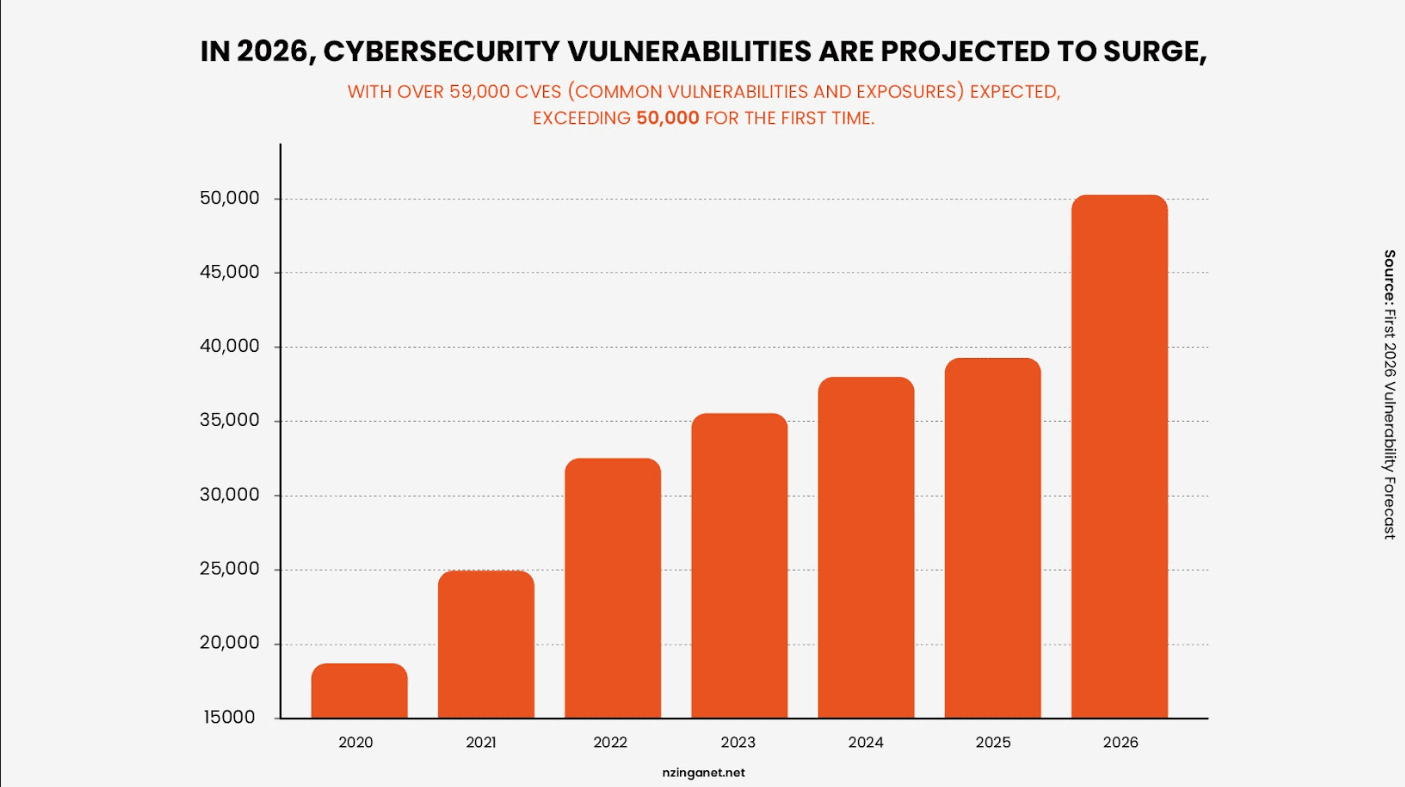
This is why understanding how penetration testing is performed is just as important as when it is performed. There are different types of penetration testing, each suited to different goals, threat models, and organizational needs.
Read on to explore the major types of penetration testing, how each one works in practice, and when to use each approach effectively.
TABLE OF CONTENTS
- What Is Penetration Testing?
- Penetration Testing vs. Vulnerability Assessment
- The Three Core Models: Black Box, White Box, and Gray Box
- Other Types of Penetration Testing by Scope and Target
- The Penetration Testing Methodology
- How to Choose the Right Type of Penetration Test
- Real-World Penetration Testing Examples
- How Often Should Pen Testing Be Conducted?
- What Makes a Quality Penetration Test
- Building an Effective Penetration Testing Strategy
- Frequently Asked Questions
Main Highlights
- Penetration tests fall into three information-sharing models: black box (no prior knowledge), white box (full access), and gray box (partial access), each suited to a different threat scenario.
- Beyond that model, tests are also scoped by target: network, web application, API, mobile, social engineering, cloud, and physical penetration testing each uncover different classes of risk.
- A quality penetration test follows a structured methodology like PTES, is performed by qualified testers, and ends with actionable reporting and retesting after remediation.
What Is Penetration Testing?
Penetration testing (commonly called pentesting) is a structured security assessment in which a skilled professional, or team of professionals, attempts to breach systems in the same way a real attacker would. The goal is not to cause damage but to identify weaknesses, document them clearly, and provide the organization with a path to remediation.
It differs from a vulnerability scan, which is largely automated and flags potential issues without verifying whether they can be exploited. A penetration test goes further by determining whether vulnerabilities are exploitable, how far an attacker could progress after gaining access, and what the real-world impact would be.
Within cybersecurity, penetration testing is considered one of the most hands-on and high-value forms of security assessment.
Penetration Testing vs. Vulnerability Assessment
Penetration testing and vulnerability assessment are often confused, but they serve different purposes within cybersecurity. While both aim to improve an organization's security posture, they differ in depth, methodology, and the type of insights they provide.
| Aspect | Vulnerability Assessment | Penetration Testing |
|---|---|---|
| Primary goal | Identify and list security weaknesses | Exploit vulnerabilities to assess real-world impact |
| Depth | Broad and surface-level | Deep and targeted |
| Methodology | Mostly automated scanning | Manual testing + tools + exploitation |
| Exploitation | Not typically performed | Actively performed when safe and authorized |
| Output | List of vulnerabilities with severity ratings | Detailed attack scenarios and business impact |
| Time required | Short (hours to days) | Longer (days to weeks) |
| Skill level | Moderate | Advanced (ethical hacking expertise required) |
| Risk insight | Theoretical risk | Real-world exploitability and impact |
A vulnerability assessment is a systematic process of identifying, classifying, and reporting security weaknesses in systems or applications. It is typically automated and focuses on breadth, producing a list of potential vulnerabilities without necessarily verifying whether they can be exploited.
Penetration testing, on the other hand, goes beyond identification. It simulates real-world attacks by actively exploiting vulnerabilities to determine their actual impact, chaining multiple weaknesses together when possible, and demonstrating how far an attacker could progress within the environment.
In short, vulnerability assessments answer "what could be wrong," while penetration tests answer "what could actually be done with it." Many organizations start with vulnerability assessments (which are faster and cheaper) and commission penetration tests for higher-risk systems or after significant changes to their environment.
The Three Core Models: Black Box, White Box, and Gray Box
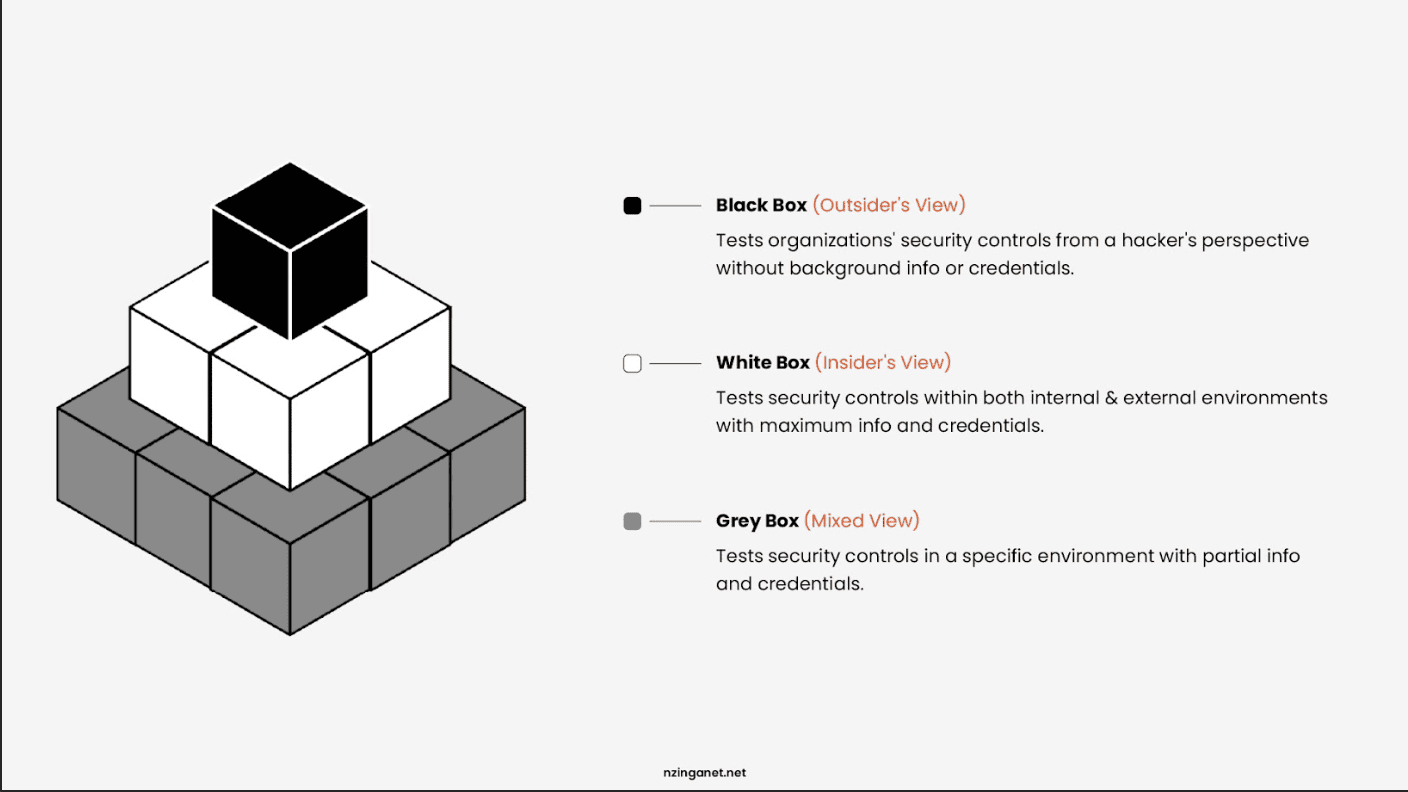
One of the primary differences in penetration testing methodology is the amount of information available to the tester before the engagement begins. These testing models are defined by the level of knowledge and access the tester has regarding the target system. Based on this distinction, penetration tests are commonly divided into three categories: black box, white box, and gray box.
Black Box Penetration Testing
In black box penetration testing, the tester receives no prior information about the target environment. They begin exactly where an external attacker would: with nothing but a target (a company name, a domain, or an IP range) and the task of getting in.
The tester must perform their own reconnaissance, map out the attack surface, identify systems and services, probe for vulnerabilities, and attempt exploitation without any insider knowledge. The name comes from the idea that the target system is a sealed black box to the tester.
What it looks like in practice:
A tester assigned to black box test a company might spend the first day doing open-source intelligence (OSINT) gathering. They search public records, scan DNS information, look for exposed subdomains, check for email addresses and employee names on LinkedIn, and probe the company's IP ranges for open ports and running services. Only after building that picture do they move into actual exploitation attempts.
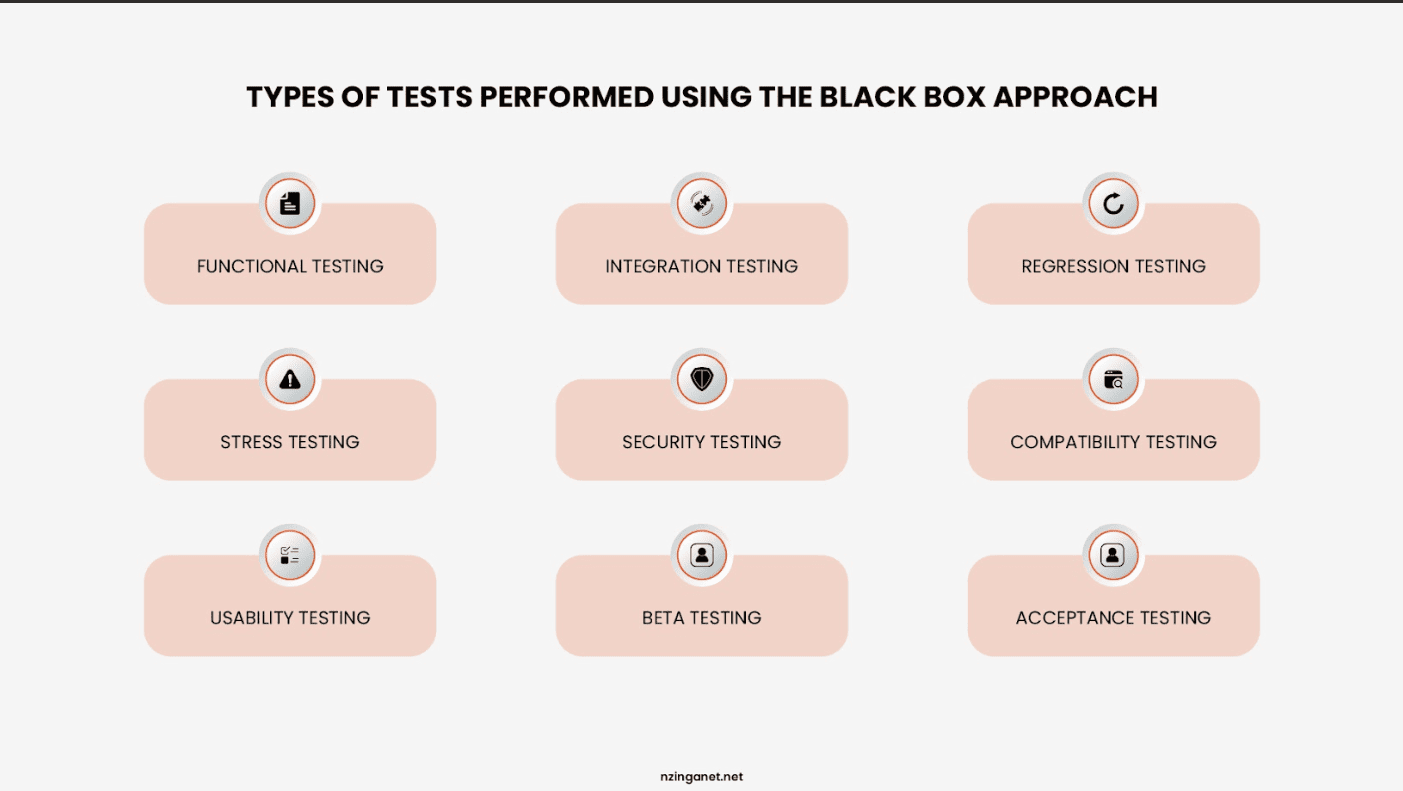
When to use it: Black box testing most accurately simulates an opportunistic external attacker, someone who found your company online and decided to probe it. It is useful for measuring how visible your vulnerabilities are from the outside and whether your perimeter defenses hold up against an uninformed adversary. However, it is typically the least efficient testing model. Significant time is spent on reconnaissance that your own security team could have skipped by sharing architecture details. For organizations with limited testing budgets, this can mean less actual vulnerability testing and more time spent mapping the environment.
White Box Penetration Testing
White box penetration testing is the opposite approach. The tester receives full information about the target: network diagrams, source code, credentials, architecture documentation, system configurations, and anything else relevant. Nothing is hidden. This model is also called crystal box testing or full disclosure testing. The tester can get straight to work identifying and exploiting vulnerabilities without spending time on reconnaissance.
What it looks like in practice:
A white box tester working on a web application might receive the full codebase, database schema, API documentation, and a set of test credentials. They can review the code directly for security flaws (SQL injection points, authentication bypasses, insecure direct object references), verify those flaws are exploitable in the running application, and trace how deep an exploit could go given their knowledge of the backend architecture.
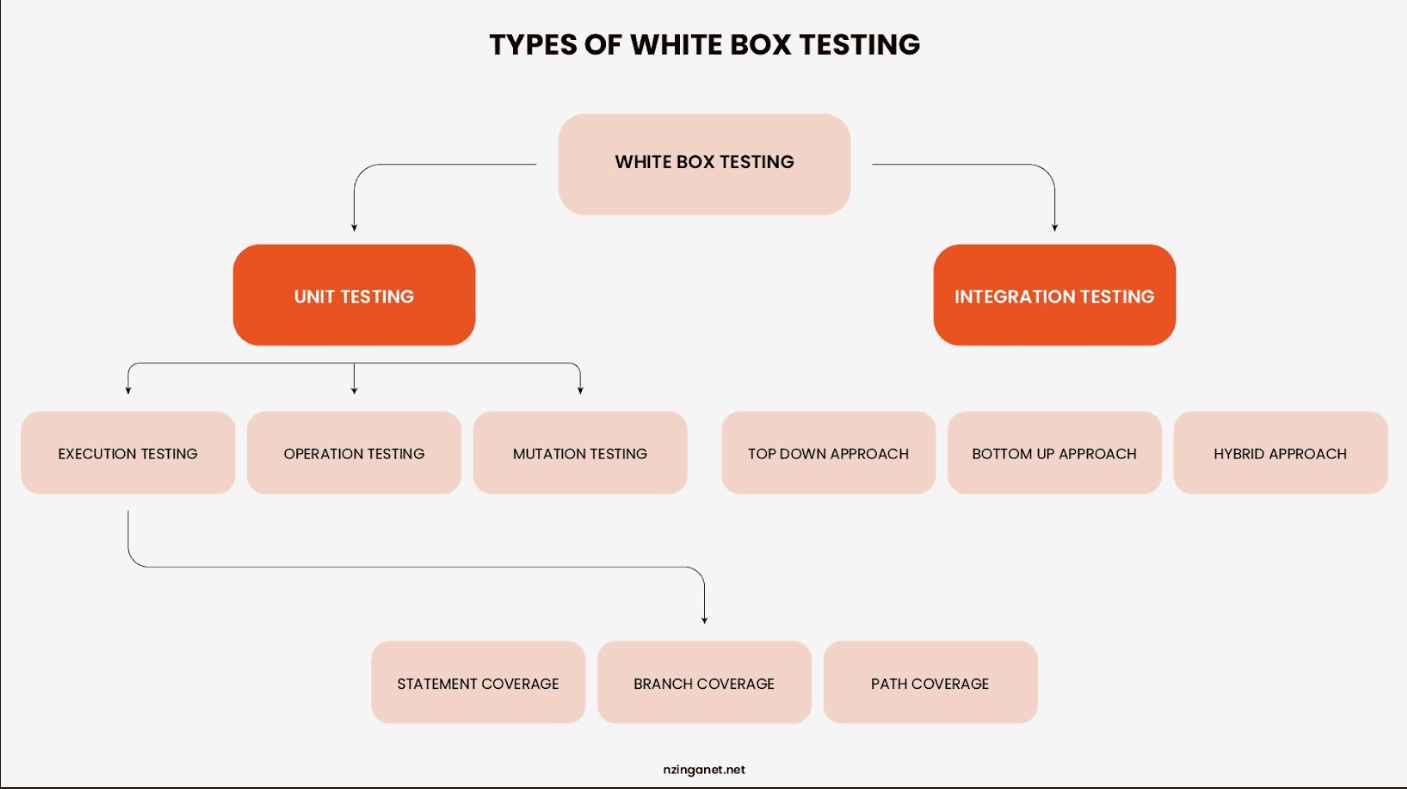
When to use it: White box testing is best for thoroughness. When you want the highest possible coverage, especially in code review, internal systems, or complex architectures, this approach lets testers spend all their time finding and exploiting actual issues rather than discovering what systems even exist. It is also well-suited to situations where you need to validate specific controls, verify that a particular patch worked, or assess a system before it goes to production. The tradeoff is that it does not simulate an external attacker realistically. An outsider would not have access to your source code or architecture diagrams. White box results tell you about vulnerabilities that exist, not necessarily how discoverable they are from outside.
Gray Box Penetration Testing
Gray box penetration testing is a hybrid security assessment in which the tester is given partial knowledge of or limited access to the target environment. This may include user credentials, partial documentation, or a general understanding of the system architecture without full technical visibility.
By combining elements of both black-box and white-box testing, this approach enables the tester to evaluate how an attacker could operate after gaining initial access to a system. It is particularly effective for identifying privilege escalation paths, access control weaknesses, lateral movement opportunities, and security misconfigurations.
What it looks like in practice:
A gray box tester assessing an internal web application might receive a standard employee account with normal user-level privileges. The objective is to determine what an authenticated but unprivileged user can do beyond their intended access, such as escalating privileges, accessing other users' data, abusing application functionality, or moving laterally through connected systems.
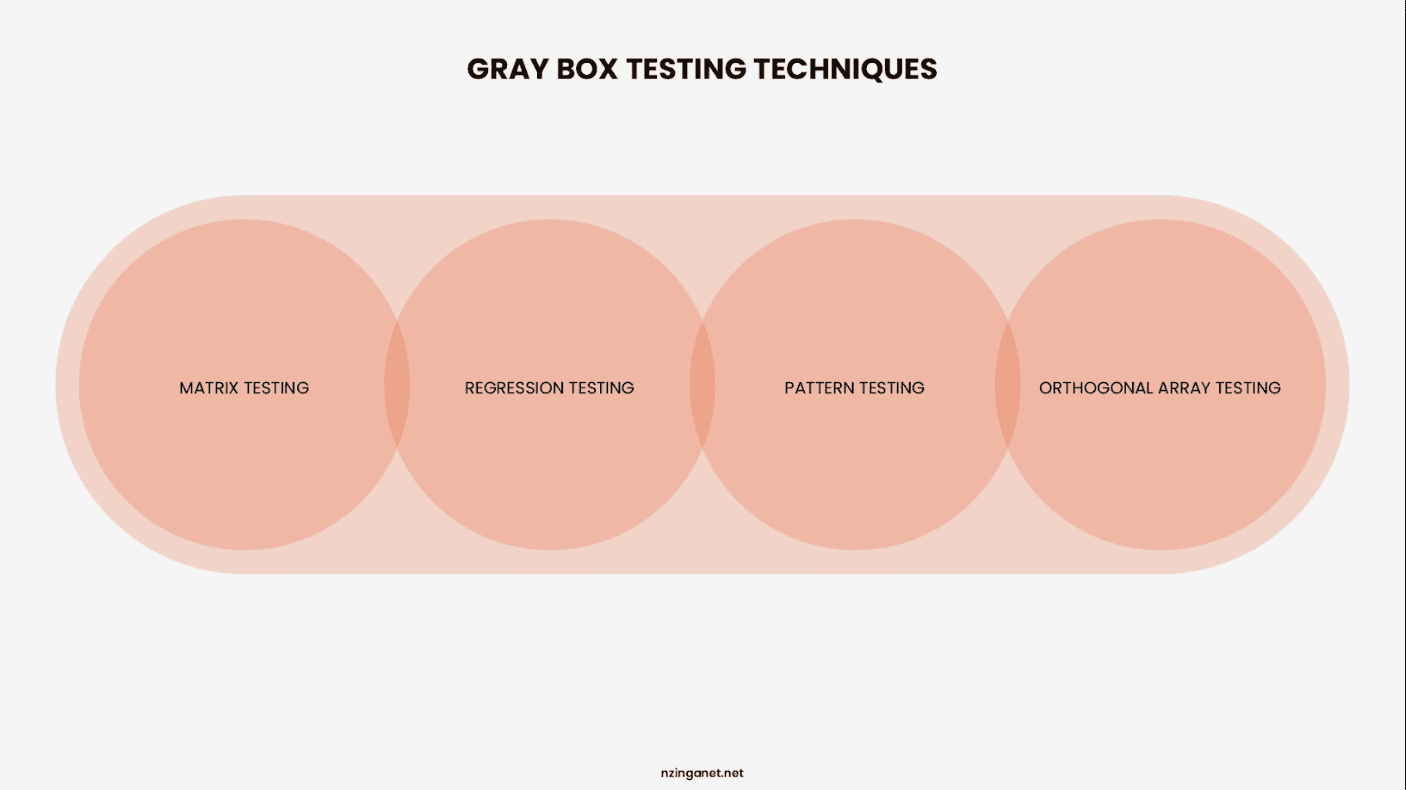
When to use it: Gray box testing is widely considered one of the most practical penetration testing models for modern organizations because it reflects common real-world attack scenarios. Many attacks begin with compromised credentials, phishing, or another form of limited initial access. Since the tester starts with partial access, this approach is generally more efficient than black-box testing while still providing meaningful insight into an organization's internal security posture. For this reason, it is often recommended for organizations seeking strong security coverage without the extended time requirements of a full black-box engagement.
Other Types of Penetration Testing by Scope and Target
Beyond the information-sharing model, penetration tests are also categorized by what they target. Here are the main types of pentesting by scope.
Network Penetration Testing
Network penetration testing focuses on the infrastructure layer: servers, firewalls, routers, switches, wireless access points, and the protocols that connect them. Testers look for misconfigurations, unpatched services, weak credentials, and paths that allow unauthorized movement through a network.
Network tests are typically divided into external and internal assessments:
- External network penetration testing attacks systems that are exposed to the internet. The tester probes internet-facing IP addresses, identifies running services, and tries to gain unauthorized access from outside the organization's perimeter.
- Internal network penetration testing simulates what happens if an attacker already has a foothold inside the network. This could model a compromised employee machine, a rogue contractor, or an attacker who got in through a phishing campaign. Internal tests often reveal how well an organization can contain a breach once it starts.
Common findings in network penetration testing include:
- Services running on unnecessary ports
- Unpatched software with known vulnerabilities
- Weak or default credentials on network devices
- Overly permissive firewall rules
- Lack of network segmentation between sensitive and non-sensitive systems
Web Application Penetration Testing
Web application penetration testing targets the business logic, authentication, authorization, and data handling of web applications. It is one of the most commonly requested types of penetration testing because web applications are widely exposed and frequently contain flaws introduced during development.
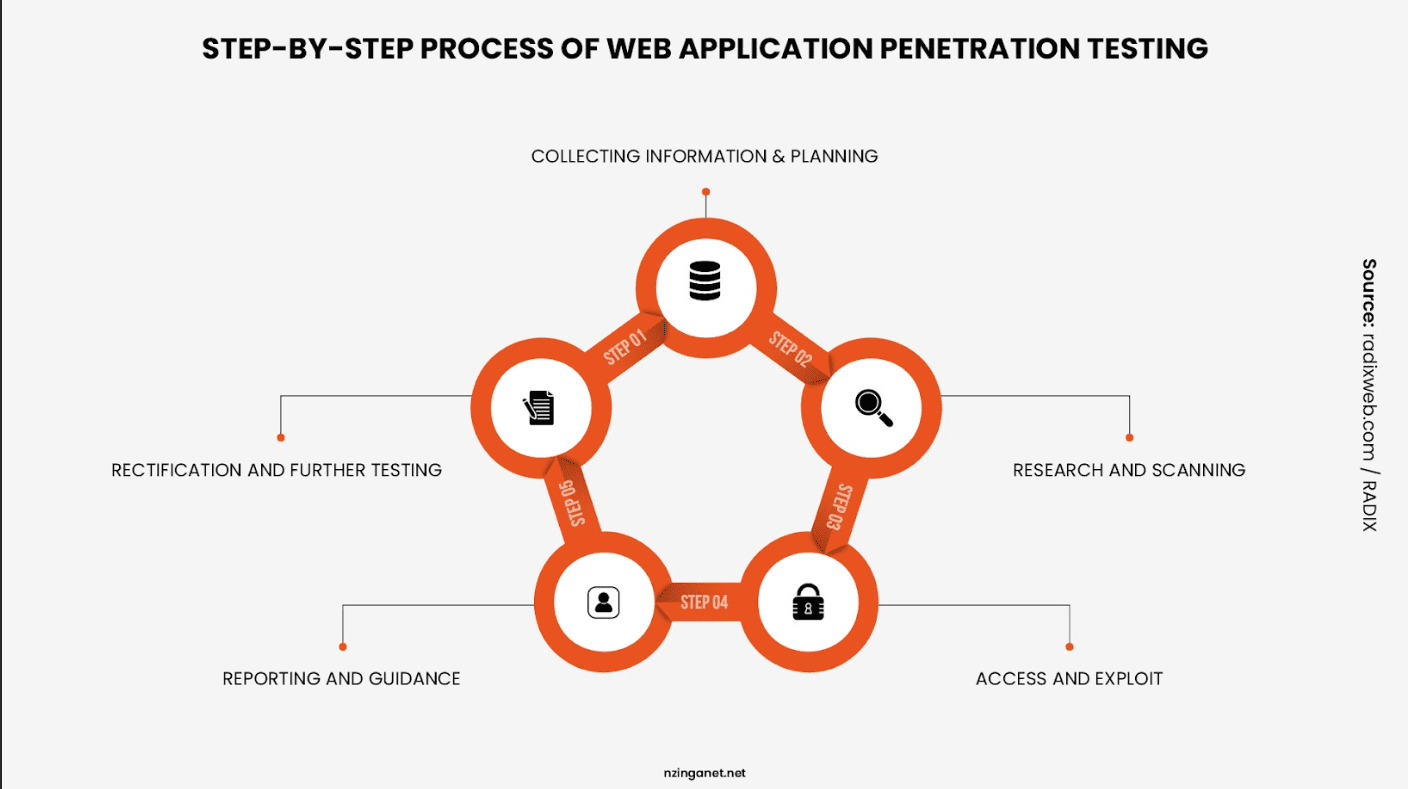
Testers typically follow frameworks like the OWASP Testing Guide and look for vulnerabilities including:
- SQL injection and other injection flaws
- Cross-site scripting (XSS)
- Broken authentication and session management
- Insecure direct object references
- Server-side request forgery (SSRF)
- Business logic bypasses (for example, changing a price to zero in an e-commerce flow)
Web application testing can be done black, white, or gray box. An unauthenticated assessment looks at what is exposed to anonymous visitors, while an authenticated assessment logs in as a user and probes what that user can access or manipulate.
API Penetration Testing
As more applications communicate through APIs, testing those interfaces has become its own discipline. API penetration testing examines REST, GraphQL, SOAP, and other API endpoints for authentication weaknesses, broken object-level authorization, excessive data exposure, and injection vulnerabilities.
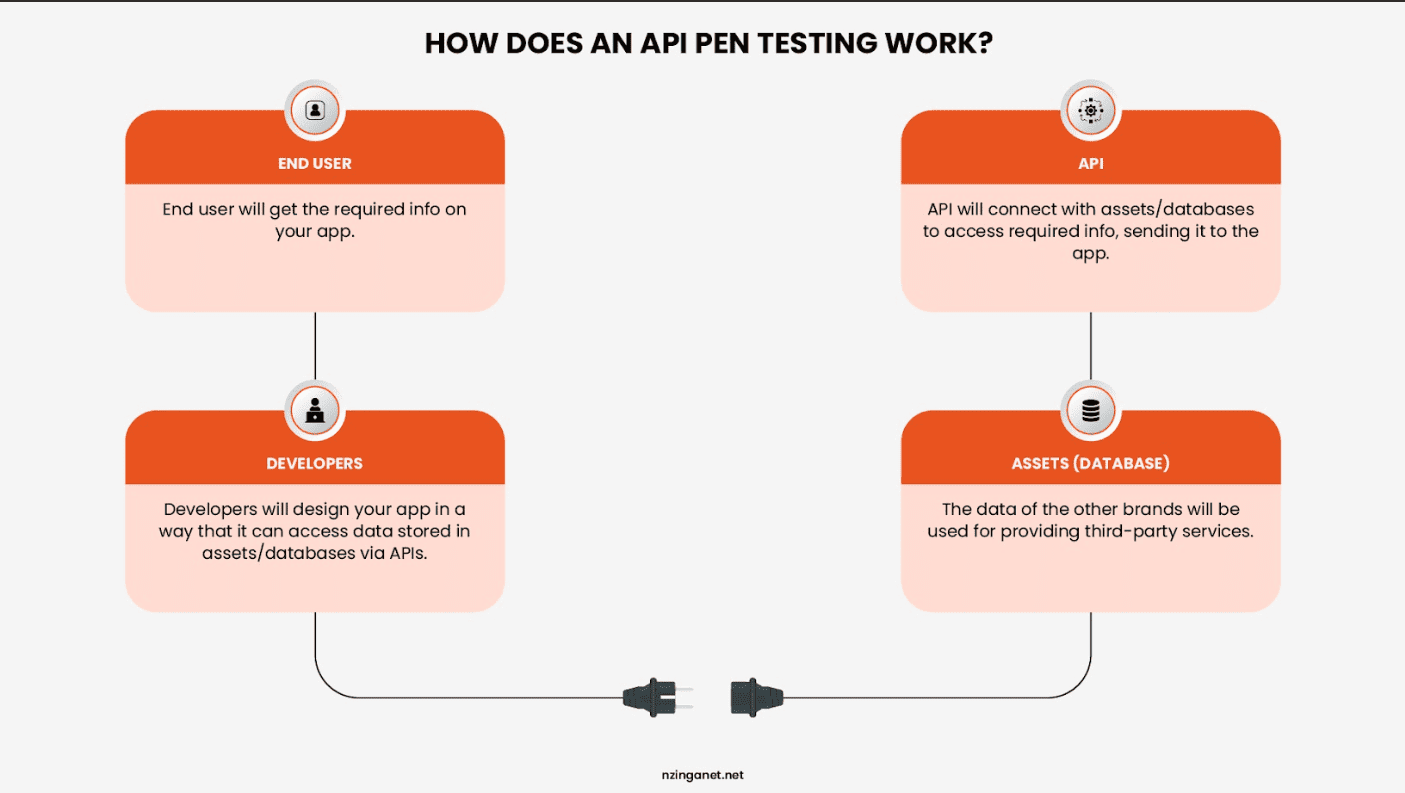
APIs are frequently overlooked in traditional web testing because they may not be visible through a browser. A thorough API test reviews the API documentation (or discovers undocumented endpoints through probing), tests each endpoint's access controls, and looks for ways to retrieve or manipulate data beyond what is intended.
Mobile Application Penetration Testing
Mobile application penetration testing covers apps on iOS and Android platforms. Testers examine the app's client-side code, its communication with backend servers, how it stores data on the device, and whether it enforces proper authentication and authorization.
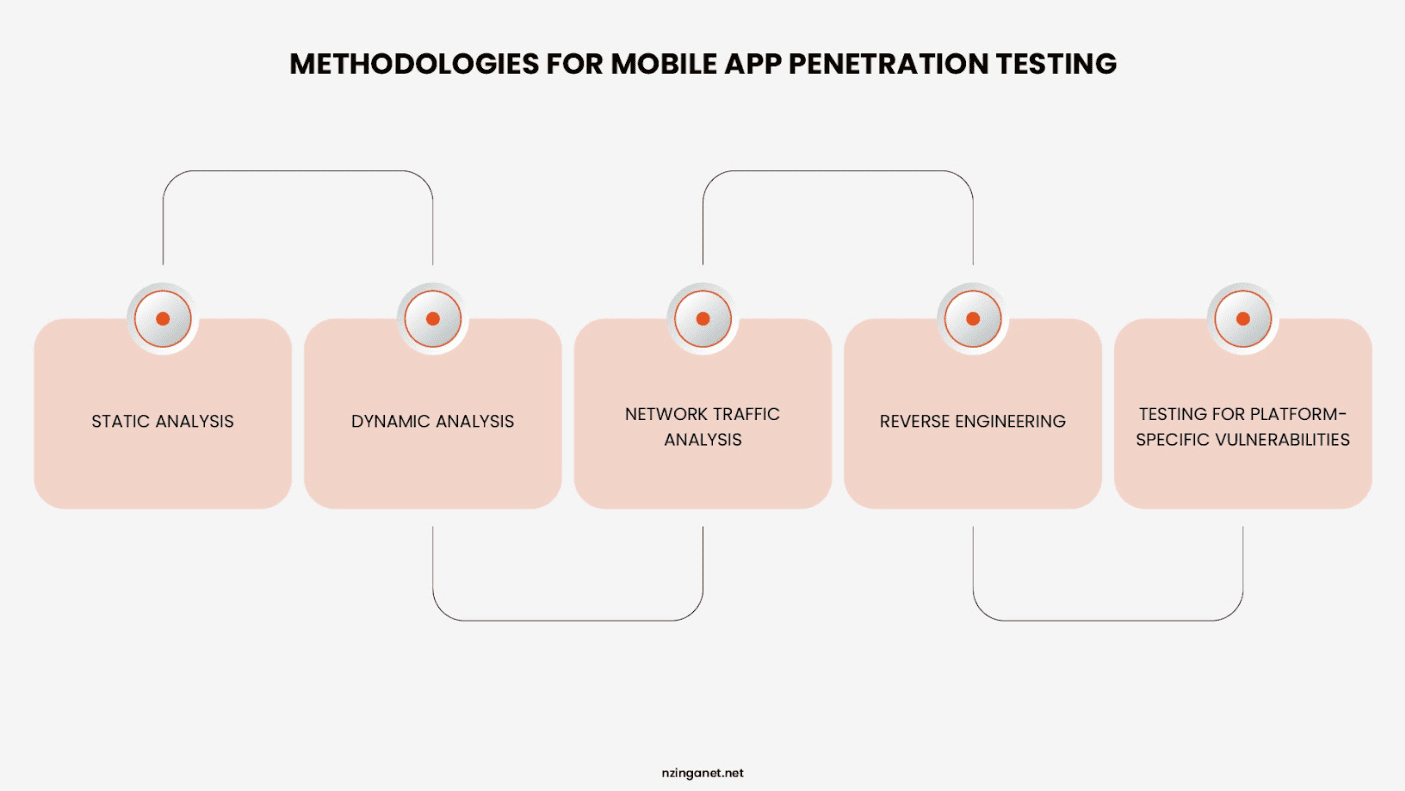
Common issues found in mobile testing include sensitive data stored in plain text on the device, traffic sent over unencrypted connections, weak certificate validation that allows man-in-the-middle attacks, and insecure inter-process communication between the app and other apps on the device.
Social Engineering Penetration Testing
Social engineering penetration testing is an ethical hacking exercise that evaluates an organization's susceptibility to human-centric attacks, rather than technical flaws. By simulating real-world tactics like phishing, vishing, or tailgating, these tests identify gaps in employee awareness and security policies, mitigating the risk of data breaches.
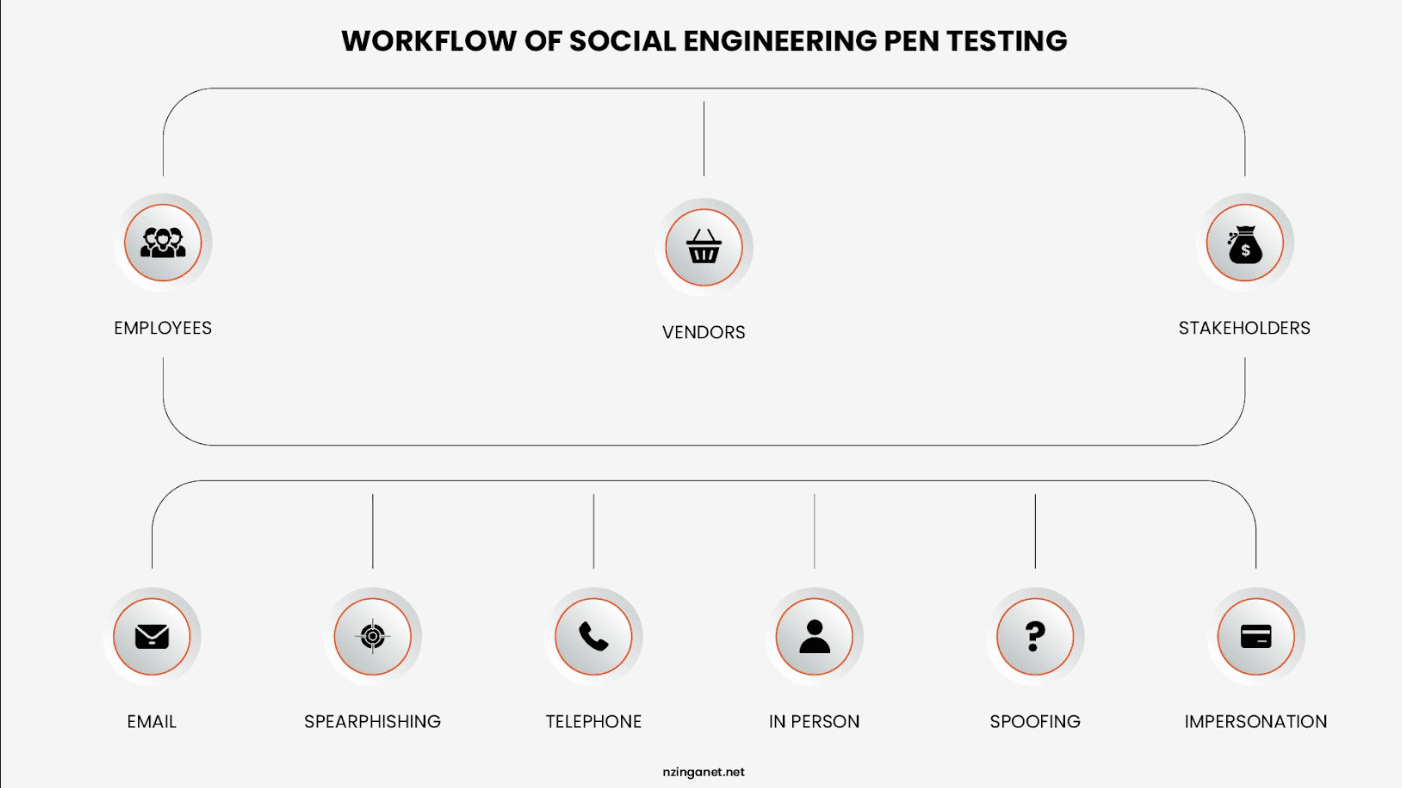
Phishing simulations are the most widely used form of social engineering testing. Testers create convincing emails that impersonate trusted sources such as executives, IT departments, vendors, or cloud service providers. The assessment measures how employees respond, including whether they click malicious links, submit credentials to fake login pages, or open unsafe attachments.
More advanced social engineering tests may include:
- Vishing (voice phishing over phone calls)
- Physical access attempts (trying to enter restricted areas by tailgating or impersonating)
- Pretexting (crafting elaborate false identities to manipulate targets)
Social engineering assessments often expose weaknesses that technical security controls alone cannot prevent. Even organizations with strong infrastructure security can remain vulnerable if employees are unprepared to recognize manipulation attempts.
Cloud Penetration Testing
Cloud penetration testing evaluates the security of cloud-based infrastructure, applications, and services hosted on platforms such as Amazon Web Services (AWS), Microsoft Azure, and Google Cloud Platform. As organizations increasingly migrate systems and data to the cloud, penetration testing has evolved to address the unique risks associated with cloud environments.
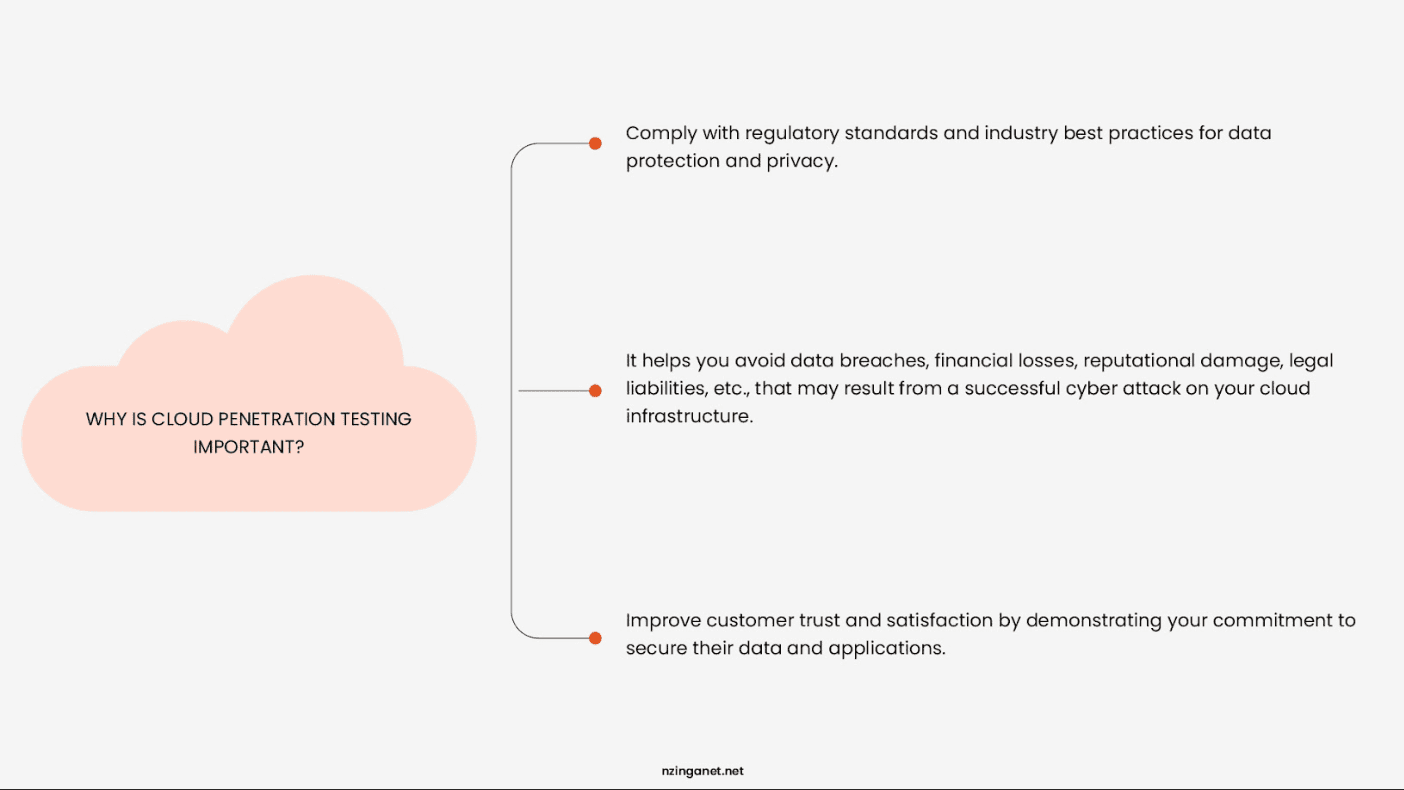
Cloud penetration testing differs from traditional infrastructure testing because cloud environments operate under a shared responsibility model. While the cloud provider is responsible for securing the underlying infrastructure, the customer remains responsible for securing configurations, identities, applications, and data hosted within the environment.
Physical Penetration Testing
Physical penetration testing assesses whether an attacker could gain physical access to sensitive areas: server rooms, executive offices, network closets, or workstations. Testers attempt to bypass physical controls like badge readers, locks, and security guards.
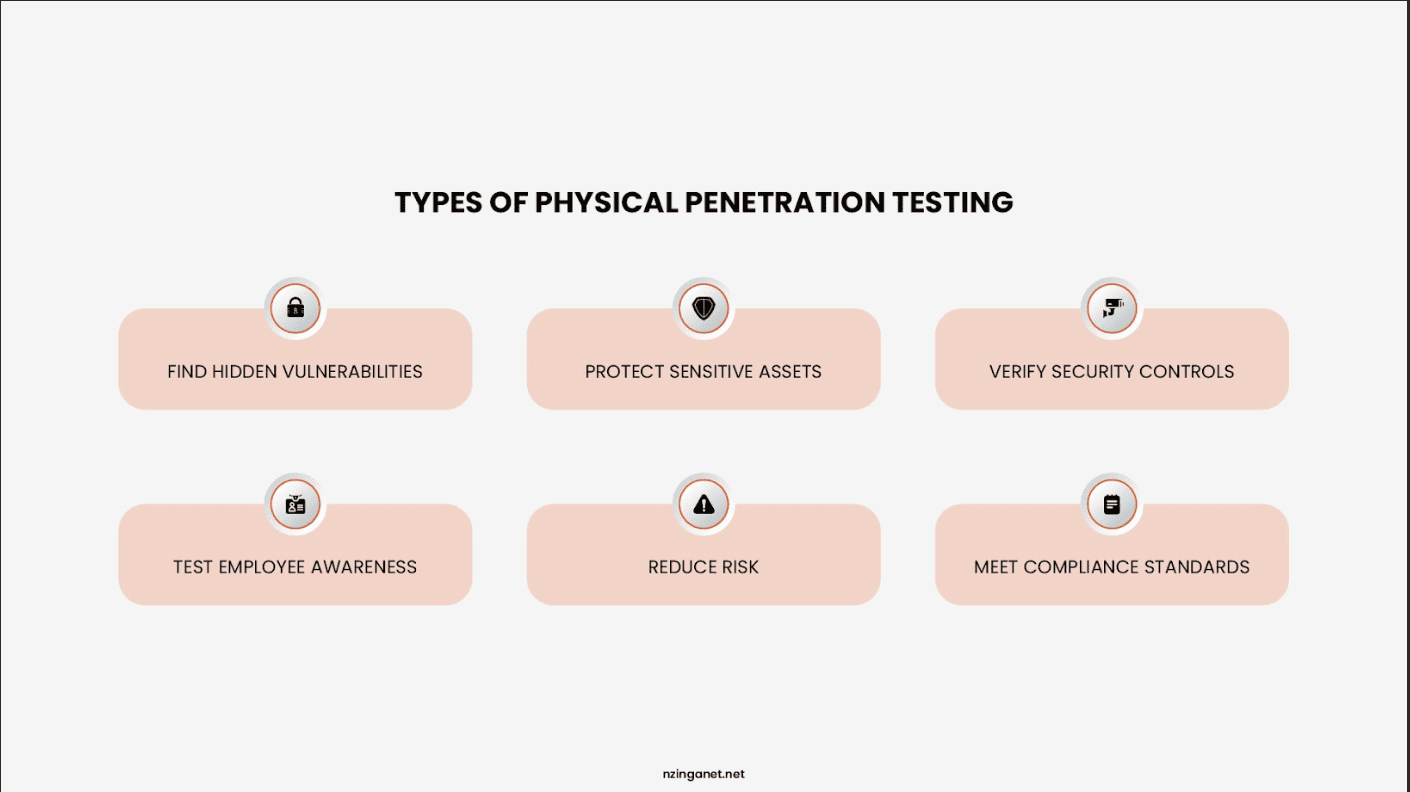
Once inside, a physical tester might plug a rogue device into a network port, access an unlocked workstation, or retrieve sensitive documents left on desks. Physical tests often uncover that technical controls inside a building are minimal because organizations assume that physical perimeter security is sufficient.
The Penetration Testing Methodology
Regardless of the type of test, professional penetration testers follow a structured penetration testing methodology. The most widely referenced is the Penetration Testing Execution Standard (PTES), which outlines seven phases:
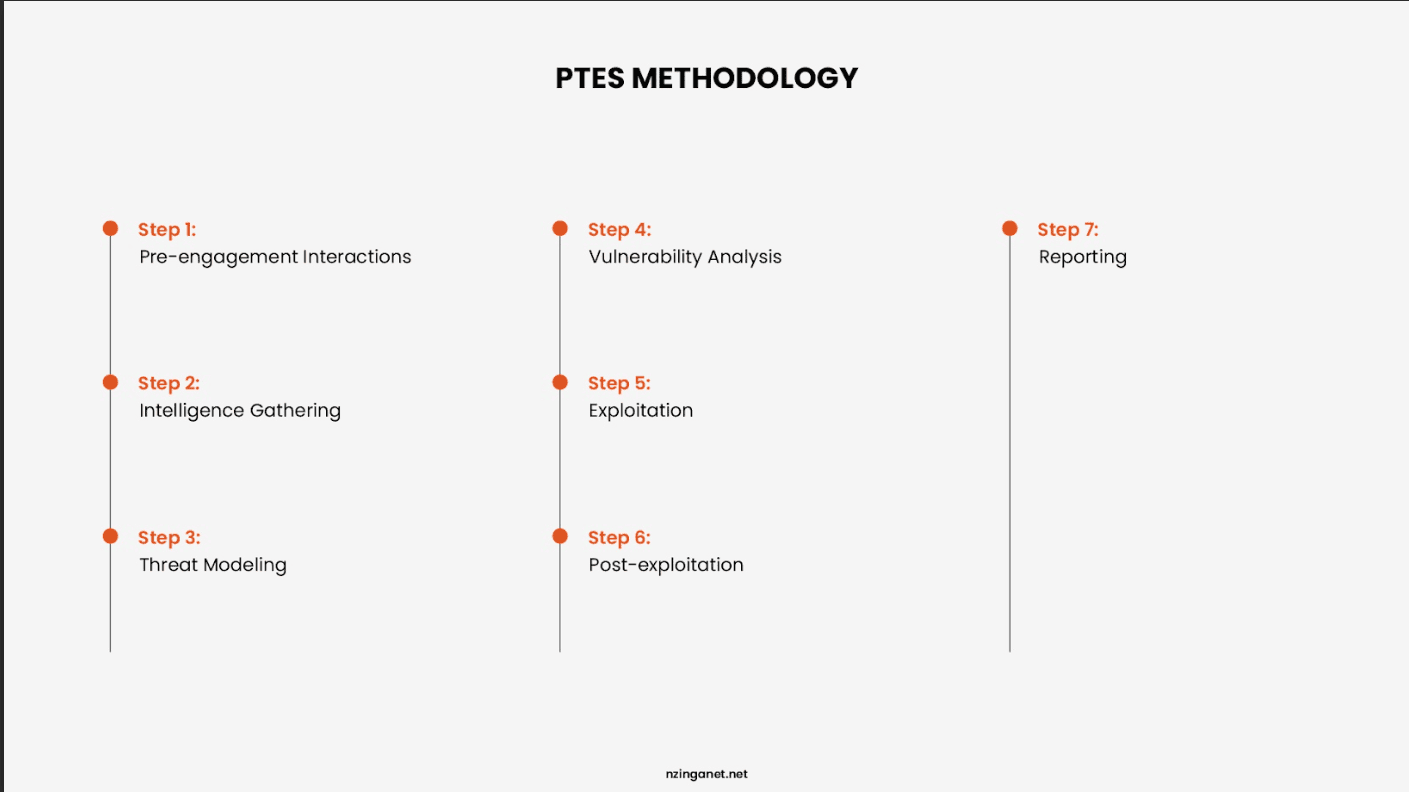
1. Pre-Engagement Interactions
The scope of the engagement is defined, rules of engagement are established, and legal authorization is documented. This stage determines which systems are in scope, which techniques are permitted, what limitations exist, and how critical findings or incidents should be communicated during the assessment.
2. Intelligence Gathering
Information about the target environment is collected through reconnaissance techniques such as open-source intelligence (OSINT), DNS analysis, network scanning, and service enumeration. In black-box engagements, this stage is typically extensive because little information is known in advance. In white-box assessments, much of the required information is provided beforehand.
3. Threat Modeling
Based on the information gathered, likely attack paths and high-value targets are identified and prioritized. This stage focuses on understanding which assets are most attractive to attackers, how they could be compromised, and which threat scenarios are most realistic for the organization.
4. Vulnerability Identification
Systems, applications, and services are analyzed to identify potential security weaknesses. This process combines automated scanning tools with manual testing and validation, since automated tools alone often fail to detect business logic flaws, complex access control issues, and chained vulnerabilities.
5. Exploitation
Identified vulnerabilities are actively tested to determine whether they can be successfully exploited. The objective is to confirm real-world exploitability and assess the level of access or control an attacker could obtain.
6. Post-Exploitation
Once access is gained, the assessment shifts toward measuring potential impact. This may include privilege escalation, lateral movement, data access, persistence mechanisms, and attempts to reach additional systems. The purpose is to determine the potential scope and severity of a successful compromise.
7. Reporting
All findings are documented in a comprehensive report containing technical details, supporting evidence, impact assessments, and remediation recommendations. An effective penetration testing report should be useful to both technical teams responsible for remediation and leadership teams responsible for evaluating organizational risk.
How to Choose the Right Type of Penetration Test
Choosing the right type of penetration test depends on what you are trying to achieve, the maturity of your security program, and the level of risk you want to evaluate. Different testing approaches focus on different aspects of an organization's security, so the goal should guide the selection rather than treating all tests as interchangeable.
- The first factor to consider is scope and objective. If the goal is to assess how an external attacker might break into your systems with no prior knowledge, a black box test is usually most appropriate. If the objective is to evaluate internal security controls or simulate an insider threat, gray box testing is often more realistic. When a detailed review of system architecture and code-level security is required, white box testing provides the deepest level of analysis.
- The second factor is the risk scenario. Organizations should consider what they are trying to simulate: an external hacker, a compromised employee account, a malicious insider, or a business partner with limited access. Each scenario aligns more closely with a specific testing model.
- The third factor is maturity and resources. Less mature security programs often benefit from vulnerability assessments and gray box testing before moving into more advanced or time-intensive black box engagements. Organizations with mature security practices may combine multiple testing types for broader coverage.
- Finally, compliance and regulatory requirements may influence the decision. Some industries require periodic penetration testing, while others specify minimum testing standards or methodologies.
Real-World Penetration Testing Examples
Penetration testing becomes easier to understand when viewed through real-world security incidents. While not every breach was directly caused by a failed penetration test, many of them highlight vulnerabilities that ethical hacking exercises are designed to uncover before attackers can exploit them.
Example 1: Equifax Data Breach (2017)
The Equifax breach exposed sensitive personal data of approximately 147 million individuals, including names, Social Security numbers, and other identifying information. The root cause was an unpatched vulnerability in the Apache Struts framework used in a public-facing web application.
In hindsight, a properly scoped penetration test or vulnerability assessment could have identified the outdated component and exposed the risk of remote exploitation. The incident demonstrates how unpatched third-party software in internet-facing systems can become a critical entry point for attackers.
Example 2: Dyn DNS Attack (2016)
Dyn, a major DNS provider, was targeted by a large-scale distributed denial-of-service (DDoS) attack that temporarily disrupted access to major platforms such as Twitter, Netflix, and Amazon.
Post-incident analysis and security testing highlighted weaknesses in the company's ability to withstand botnet-driven traffic surges. A focused penetration test simulating volumetric and application-layer attacks can help identify infrastructure limitations and resilience gaps before such events occur in production.
Example 3: Target Data Breach (2013)
The Target breach resulted in the compromise of credit and debit card information belonging to around 40 million customers. Attackers initially gained access through a third-party vendor, then moved laterally within Target's internal network.
Security assessments conducted after the breach identified weaknesses such as insufficient network segmentation and weak internal access controls. A well-designed penetration test simulating vendor compromise and internal lateral movement could have exposed these pathways earlier.
Example 4: Government Portal Breach (Canada, 2019)
A vulnerability in a Canadian government job application portal led to unauthorized access to personal data of thousands of users. The issue was linked to flaws in authentication handling within the web application.
Security testing conducted after the incident revealed additional weaknesses in input validation and access control logic. A targeted web application penetration test could have identified these issues before they were exposed publicly.
Example 5: Norsk Hydro Ransomware Incident (2019)
Norsk Hydro, a global aluminum producer, suffered a ransomware attack that disrupted operations across multiple facilities. The attackers leveraged existing vulnerabilities and weak points in the company's internal systems to deploy malware at scale.
Following the incident, security evaluations focused on identifying gaps in endpoint security, privilege management, and network segmentation. A penetration test simulating initial compromise and lateral movement could have highlighted how quickly an attacker could escalate access inside the environment.
How Often Should Pen Testing Be Conducted?
Most security frameworks recommend at least annual penetration testing for core systems. However, many factors warrant more frequent testing:
- After major changes to infrastructure or applications
- Following a security incident
- Before launching a new product or service
- After migrating to a new cloud environment
- When acquiring another company and integrating their systems
Some organizations with mature security programs run continuous penetration testing or maintain ongoing retainer agreements with security firms to conduct tests quarterly or on a rolling basis.
What Makes a Quality Penetration Test
The effectiveness of a test depends largely on the skill of the testers, the methodology used, and the clarity of the engagement itself. A high-quality penetration test is defined by several key characteristics.
- Qualified and experienced testers. Certifications such as OSCP (Offensive Security Certified Professional), CEH (Certified Ethical Hacker), or GPEN (GIAC Penetration Tester) indicate formal training and baseline competence. However, practical, hands-on experience in real-world attack simulation is often just as important as certifications.
- Manual testing combined with tool usage. While automated scanners are useful for identifying known vulnerabilities, they are not sufficient on their own. Manual testing is essential for discovering business logic flaws, complex access control issues, and chained vulnerabilities that automated tools typically miss.
- Clear and well-defined scope. Ambiguous or overly broad scope leads to incomplete or unfocused results. Strong penetration tests are built on clearly defined in-scope assets, explicit rules of engagement, and specific objectives agreed upon before testing begins.
- Actionable reporting. A useful report goes beyond listing vulnerabilities and severity scores. It should explain how each issue was discovered, how it could be exploited, what the real-world impact would be, and how it can be remediated. Findings should also be prioritized based on actual risk to the organization.
- Retesting after remediation. Finally, retesting after remediation is a key part of a mature penetration testing process. Once vulnerabilities are fixed, they should be verified again to ensure the issues are properly resolved and no residual weaknesses remain.
Building an Effective Penetration Testing Strategy
Penetration testing is one of the most direct ways to understand the real-world security posture of your systems. Whether you choose black box, white box, or gray box depends on what you are trying to simulate and how efficient you need the engagement to be.
Network tests, web application tests, API tests, mobile tests, cloud tests, social engineering assessments, and physical tests each address different layers of your security. A mature security program typically combines several of these over time.
What matters most is that testing is scoped well, conducted by qualified professionals using a rigorous penetration testing methodology, and followed by genuine remediation effort. Finding vulnerabilities is valuable. Fixing them is what actually reduces risk.
NzingaNet's team of accredited pen testers can be trusted to provide the comprehensive testing programmes to meet your business needs. Our experts help organizations in a range of industries uncover and address complex vulnerabilities across their internal and external infrastructure, wireless networks, web apps, mobile apps, network builds and configurations and more. To learn more or to schedule a consultation, get in touch with our team.
Need Help with Penetration Testing?
NzingaNet's team of certified penetration testers can help you identify vulnerabilities before attackers find them. From black box to white box testing, we'll work with you to build a testing program that fits your business needs, risk profile, and compliance requirements.
If you're unsure where to start, scheduling a consultation can help clarify the next steps before small issues become larger risks.
COMMON QUESTIONS
Frequently Asked Questions
1. What is the difference between penetration testing and ethical hacking?
The terms are often used interchangeably. Ethical hacking is a broader term referring to any authorized attempt to identify security weaknesses. Penetration testing is a more structured, scoped form of ethical hacking with specific deliverables and methodology.
2. Is penetration testing the same as red teaming?
No. A red team exercise is more advanced and adversarial. Red teams simulate full attack campaigns, often testing detection and response capabilities alongside technical vulnerabilities, and operate with less defined scope to more accurately mimic sophisticated threat actors. A penetration test is more focused: it targets specific systems within a defined scope within a defined timeframe.
3. How long does a penetration test take?
A typical web application penetration test takes one to two weeks. A network penetration test of a medium-sized organization might take two to four weeks. More complex engagements covering multiple systems can run longer. The scope definition during pre-engagement will determine the timeline.
4. Do penetration testers break things?
Professional testers operate carefully and follow rules of engagement designed to minimize disruption. That said, testing does carry some risk, which is why scope and rules of engagement are agreed upon in advance. Production systems are sometimes tested during off-hours. A good testing firm will flag critical vulnerabilities immediately rather than waiting for the final report.
5. What should I do with penetration testing results?
Treat the report as a remediation roadmap. Prioritize critical findings first (especially those that are both exploitable and high-impact), move through high and medium findings, and track remediation systematically. Share findings with relevant technical teams, update your risk register, and schedule retesting after fixes are implemented.
6. How much does a penetration test cost?
Cost varies with scope, but a typical engagement runs from a few thousand dollars for a focused web application test to well over $20,000 for a large, multi-system network and cloud assessment. The main drivers are the number of systems in scope, the testing model (black box takes longer than white or gray box), and how experienced the testing team is.
PENNSYLVANIA & BEYOND
Ready for Security Testing That Actually Protects Your Business?
NzingaNet provides penetration testing and cybersecurity consulting services to small and mid-sized businesses across Pennsylvania and the surrounding region. From vulnerability assessments to full-scale red team exercises, we give your business the security expertise it needs.